
Category Archives: Sports Ethics

College Sports Ethics: Challenges, Questions, and Opportunities (Now Available)

I’m excited to announced that the latest in the Studies in Philosophy of Sport series is now published:

College Sports Ethics Cover

Pre-Order Today!

College Sports Ethics: Challenges, Questions, and Opportunities edited by Chad Carlson and myself can be ordered from Bloomsbury or from Amazon (sponsored link) and other booksellers.

Chad and I started working on this collection several years ago; our first conversations started back in 2021! We knew the landscape of college sports was changing and that new discussions about ethics in college sports were needed. Of course, there are many books that explore the different scandals that periodically erupt and plague college sports: but we thought what was needed were conversations about the nature of college sports and the relevant ethical principles. What makes college sport different from other sport domains and what ethical challenges and questions are unique to this domain? What opportunities does this unique domain of sport offer?

With that overarching idea in mind, we reached out to philosophers of sport and brought together a set of thinkers we think are perfect to get these conversations going. The table of contents is listed below.

From the back cover:

The first chapters examine college sports at a systematic level, considering the ways we can evaluate college sport as a whole, as well as how we ought to structure college sports in ways that are fairer and better tests of athletic excellence. The second section looks more closely at the interplay of the academic institutions and athletics, arguing that since college sports programs are part of institutions of higher learning, we need to consider the purposes of these institutions when evaluating college sports. Moreover, the well-being and protection of college athletes is central to an ethically defensible college system. The last section of chapters explores several controversial issues in college sports, including gender inequality and transgender participation.

Table of Contents:

Introduction (Chad Carlson, Hope College, USA, and Shawn E. Klein, Arizona State University, USA)

Part 1: The System
1. The Good, the Bad, and the Costly (Pam R. Sailors, Missouri State University, USA)
2. The Ethics of the Level Playing Field (R. Scott Kretchmar, Pennsylvania State University, USA)
3. Tournaments, Tests, and the Aims of Intercollegiate Athletic Competitions (Aaron Harper, West Liberty University, USA)

Part 2: Institutions and Academics
4. Taking College (and) Sport Seriously (Alex Wolf-Root, The Ohio State University, USA)
5. Holding Institutions Responsible for Student-Athlete Well-Being (Peg Brand Weiser, University of Oregon, USA)
6. Duty of Care: Non-traumatic Deaths and DI Collegiate Football (Nancy Kane, State University of New York, Cortland, USA)
7. The Professor as Fan (Adam Kadlac, Wake Forest University, USA)

Part 3: Controversies
8. Gender and Ethics in College Sport: Hegemonic Masculinity as an Underlying Problem (Colleen English, Pennsylvania State University, Berks, USA)
9. Sooner or Later: Changing Team Names and Mascots (Jeremy Fried, Auburn University, USA)
10. Caught in Transition: The Ethical Issues of Trans Athletes in Collegiate Sport (John Gleaves, California State University, Fullerton, USA)
11. Reflections on Muddy Waters, Marijuana, and Moving Goalposts: Against “Returning” Reggie Bush’s Heisman (S. Seth Bordner, University of Alabama, USA)
Leave a comment

Filed under Books, College, NCAA, Philosophy, Sports Ethics, Sports Studies

This Week: College Sports Ethics: Challenges, Questions, and Opportunities

I’m excited to announced that the latest in the Studies in Philosophy of Sport is now available for pre-order and will be published on Thursday December 11, 2025

College Sports Ethics Cover

  Pre-Order Today!

College Sports Ethics: Challenges, Questions, and Opportunities edited by Chad Carlson and myself can be pre-ordered from Bloomsbury or from Amazon (sponsored link) and other booksellers.

Chad and I started working on this collection several years ago; our first conversations started back in 2021! We knew the landscape of college sports was changing and that new discussions about ethics in college sports were needed. Of course, there are many books that explore the different scandals that periodically erupt and plague college sports: but we thought what was needed were conversations about the nature of college sports and the relevant ethical principles. What makes college sport different from other sport domains and what ethical challenges and questions are unique to this domain? What opportunities does this unique domain of sport offer?

With that overarching idea in mind, we reached out to philosophers of sport and brought together a set of thinkers we think are perfect to get these conversations going. The table of contents is listed below.

From the back cover:

The first chapters examine college sports at a systematic level, considering the ways we can evaluate college sport as a whole, as well as how we ought to structure college sports in ways that are fairer and better tests of athletic excellence. The second section looks more closely at the interplay of the academic institutions and athletics, arguing that since college sports programs are part of institutions of higher learning, we need to consider the purposes of these institutions when evaluating college sports. Moreover, the well-being and protection of college athletes is central to an ethically defensible college system. The last section of chapters explores several controversial issues in college sports, including gender inequality and transgender participation.

Table of Contents:

Introduction (Chad Carlson, Hope College, USA, and Shawn E. Klein, Arizona State University, USA)

Part 1: The System
1. The Good, the Bad, and the Costly (Pam R. Sailors, Missouri State University, USA)
2. The Ethics of the Level Playing Field (R. Scott Kretchmar, Pennsylvania State University, USA)
3. Tournaments, Tests, and the Aims of Intercollegiate Athletic Competitions (Aaron Harper, West Liberty University, USA)

Part 2: Institutions and Academics
4. Taking College (and) Sport Seriously (Alex Wolf-Root, The Ohio State University, USA)
5. Holding Institutions Responsible for Student-Athlete Well-Being (Peg Brand Weiser, University of Oregon, USA)
6. Duty of Care: Non-traumatic Deaths and DI Collegiate Football (Nancy Kane, State University of New York, Cortland, USA)
7. The Professor as Fan (Adam Kadlac, Wake Forest University, USA)

Part 3: Controversies
8. Gender and Ethics in College Sport: Hegemonic Masculinity as an Underlying Problem (Colleen English, Pennsylvania State University, Berks, USA)
9. Sooner or Later: Changing Team Names and Mascots (Jeremy Fried, Auburn University, USA)
10. Caught in Transition: The Ethical Issues of Trans Athletes in Collegiate Sport (John Gleaves, California State University, Fullerton, USA)
11. Reflections on Muddy Waters, Marijuana, and Moving Goalposts: Against “Returning” Reggie Bush’s Heisman (S. Seth Bordner, University of Alabama, USA)

Leave a comment

Filed under Books, College, NCAA, publications, Sports Ethics, Sports Studies

New Book: College Sports Ethics: Challenges, Questions, and Opportunities

I’m excited to announced that the latest in the Studies in Philosophy of Sport is now available for pre-order!

College Sports Ethics Cover

Pre-Order Today!

College Sports Ethics: Challenges, Questions, and Opportunities edited by Chad Carlson and myself is schedule to be published in December 2025. You can pre-order from Bloomsbury or from Amazon (sponsored link) and other booksellers.

Chad and I started working on this collection several years ago; our first conversations started back in 2021! We knew the landscape of college sports was changing and that new discussions about ethics in college sports were needed. Of course, there are many books that explore the different scandals that periodically erupt and plague college sports: but we thought what was needed were conversations about the nature of college sports and the relevant ethical principles. What makes college sport different from other sport domains and what ethical challenges and questions are unique to this domain? What opportunities does this unique domain of sport offer?

With that overarching idea in mind, we reached out to philosophers of sport and brought together a set of thinkers we think are perfect to get these conversations going. The table of contents is listed below.

From the back cover:

The first chapters examine college sports at a systematic level, considering the ways we can evaluate college sport as a whole, as well as how we ought to structure college sports in ways that are fairer and better tests of athletic excellence. The second section looks more closely at the interplay of the academic institutions and athletics, arguing that since college sports programs are part of institutions of higher learning, we need to consider the purposes of these institutions when evaluating college sports. Moreover, the well-being and protection of college athletes is central to an ethically defensible college system. The last section of chapters explores several controversial issues in college sports, including gender inequality and transgender participation.

Table of Contents:

Introduction (Chad Carlson, Hope College, USA, and Shawn E. Klein, Arizona State University, USA)

Part 1: The System
1. The Good, the Bad, and the Costly (Pam R. Sailors, Missouri State University, USA)
2. The Ethics of the Level Playing Field (R. Scott Kretchmar, Pennsylvania State University, USA)
3. Tournaments, Tests, and the Aims of Intercollegiate Athletic Competitions (Aaron Harper, West Liberty University, USA)

Part 2: Institutions and Academics
4. Taking College (and) Sport Seriously (Alex Wolf-Root, The Ohio State University, USA)
5. Holding Institutions Responsible for Student-Athlete Well-Being (Peg Brand Weiser, University of Oregon, USA)
6. Duty of Care: Non-traumatic Deaths and DI Collegiate Football (Nancy Kane, State University of New York, Cortland, USA)
7. The Professor as Fan (Adam Kadlac, Wake Forest University, USA)

Part 3: Controversies
8. Gender and Ethics in College Sport: Hegemonic Masculinity as an Underlying Problem (Colleen English, Pennsylvania State University, Berks, USA)
9. Sooner or Later: Changing Team Names and Mascots (Jeremy Fried, Auburn University, USA)
10. Caught in Transition: The Ethical Issues of Trans Athletes in Collegiate Sport (John Gleaves, California State University, Fullerton, USA)
11. Reflections on Muddy Waters, Marijuana, and Moving Goalposts: Against “Returning” Reggie Bush’s Heisman (S. Seth Bordner, University of Alabama, USA)


Leave a comment

Filed under Books, College, NCAA, publications, Sports Ethics, Sports Studies

Two Kinds of Sports Ethics

Distinctions between the external and internal are common throughout philosophy, and sports philosophy is no exception. And though I think in many instances these distinctions are overdrawn, I’ve been thinking about yet another external/internal distinction.

There is what I’ve been calling External Sports Ethics: the focus on the various scandals or controversies surrounding sport and athletes. This focuses on things like domestic violence by athletes, issues of abuse and harassment, racial and other forms of discrimination, various socio-economic problems in sport. This focus is often what many outside of Sports Ethics think Sports Ethics is primarily about.

These are important ethical concerns and, unfortunately, these issues often surround sport and athletes. I call them external because they are external to the fundamental structure and purpose of sport. They are not about sport as such. These are problems that occur in all human domains and there is nothing unique about these problems that arises from sport itself. Sport is one particular way to focus on these concerns, but the focus is on those concerns, not sport.

What I call Internal Sports Ethics is the focus on the fundamental structure and purpose of sport and the ethical question arising from or due to the structure or purpose. These are things like the ethics of fouling or gamesmanship, questions about the application of rules or to the justification of these rules, and questions about the moral value of sport. For the most part, these are issues or concerns that come about only within the context of sport. They require, in order to understand and make progress on these questions, thinking about the fundamental nature of sport.

I’ve always been for more interested in Internal Sports Ethics. This is primarily what my courses focus on, and what I tend to write about it. The External Sports Ethics is important, of course, but just not as interesting to me personally.

Why draw the distinction?

Partly, this is just taxonomy; doing what philosophers love to do: categorize.

Partly, it is to note the difference between what I do in my classrooms and what I talk about with journalists and media. Though in talking to journalists, I try to pull things back to a more internal focus; the story the journalists are looking for is often more of an external focus. Identifying these two distinct ways of thinking about sports ethics has helped me understand the differences between what I am interested in and what the journalist is interested in. I’d like to think that has helped me to communicate better with journalists and with my students.

But I also think there is something deeper here that suggests a way that philosophers are different from their fellow academics. Speaking in generalities, I have found that most study of sport outside of philosophy is the external variety. They are concerned with issues of the day: gender, climate change, racism, sexism, or something like that. And then they look at the ways in which these things show up in and around sport. But they could just as easily be writing about theater, ice cream shops, or dog grooming. Sport is a vehicle by which they look at other issues. It is a hook to get people interested: that is, most people are interested in sport, so sport becomes a way to reach out to people to get to them to think about other topics. There is little if any attention brought to what sport is; in part, because sport is just the instrument to get things going.

In case I am misunderstood: this is not criticism. There is nothing wrong with using sport in this way to study other important topics or concerns. It can be a very useful hook or way into things.

My point is that it is helpful, and important, to see how different these approaches are. The questions are different, the methods are different, and the discussions are different. Identifying this difference has been immensely helpful for me when working with colleagues in other disciplines studying sport. I was often perplexed by what they were doing; the kinds of things they focused on. I felt out of step. I still usually do, but now I understand why. And I can see the value of both approaches and also better appreciate the value of the internal approach.

The external approach has its value but it’s not what I am interested in or what I do. I am interested in understanding sport and the moral questions that arise because of sport. Being able to identify that allows me to better focus and organize my research and teaching. It helps me make more sense of what I am doing by seeing that it is something quite different from what my non-philosophy colleagues are doing.

Leave a comment

Filed under Philosophy, Sports Ethics, Sports Studies

Announcement: Review of Sport Realism

Tim Elcombe’s review of Sport Realism: A Law-Inspired Theory of Sport by Aaron Harper was recently published in:  The Review of Metaphysics, Volume 77, Number 1 (Issue No. 305), September 2023, pp. 147-149. Find the review here: https://muse.jhu.edu/article/906818

Harper’s Sport Realism is the fourth book in Lexington Book’s Studies in Philosophy of Sport,of which I am the general editor.

Another review of Sport Realism was published last year on Nordic Sport Science Forum: https://idrottsforum.org/bregun_harper230418/ 

Leave a comment

Filed under law, Site Announcements, Sports Ethics

Podcast: The Tully Show

I had the great pleasure of joining Mike Tully on his podcast: The Tully Show. We had a wide-ranging conversation about sports ethics and the ethics of sports fandom. Check it out:

https://tullyshow.libsyn.com/shawn-klein-the-sports-ethicist

Leave a comment

Filed under Fandom, podcast, Sports Ethics

Pay to Tank in the NFL

Brian Flores has alleged that Stephen Ross, owner of the Miami Dolphins, offered the then Dolphins head coach $100,000 per loss in a tanking scheme for a better draft position. (He’s also accusing NFL teams of hiring discrimination, arguably a more important and serious allegation, but also out of the main focus of this blog: I leave that to legal scholars.) Former Brown’s coach, Hue Jackson, has also come forward alleging that the Browns paid him to lose in a similar pay-to-tank scheme.

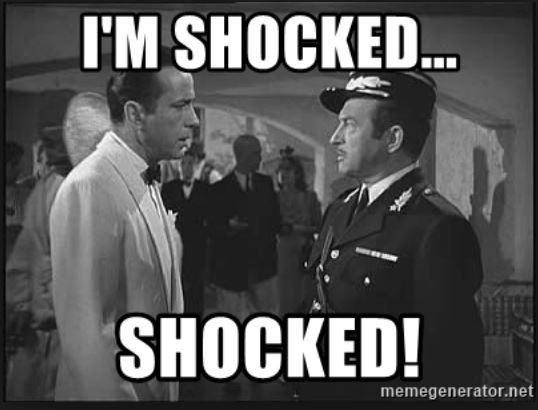
Captain Renault Casablanca I'm schocked!On one hand, the media and sports pundits sound a lot like Captain Renault. Tanking? What? How could that be? Not in the NFL! On the other hand, owners paying coaches to intentionally lose does seem somehow worse than just Suck for Luck.

So, what, if anything, is wrong with tanking?

The basic argument is that sport is a competition. It is, as the late Robert Simon described it, “a mutual quest for excellence.” Winning may not be everything, but the attempt to win, to play hard, to give one’s maximum effort seems to be essential. To lose on purpose, to throw the game, undermines the very point and essence of the activity.

Secondly, sport is open-ended. The outcome is to be determined by the play of the game. For a team to commit itself to lose means the activity is no longer a contest. It becomes something akin to a scripted performance, rather than sporting event. As Simon has argued elsewhere, this cheats everyone involved.

But it is also not quite that simple. Why, after all, are the teams (allegedly) tanking? Why did the Colts purportedly Suck for Luck? It was to get Andrew Luck, a QB with the potential to carry the Colts forward to many winning seasons after they parted ways with Peyton Manning. Isn’t this, then, attempting to win over the long haul? That is, by losing now, a team has the potential to sign players through the draft who will hopefully allow them to win more later. Maybe, then, this Tanking-As-Delayed-Gratification is ultimately compatible with the ideal of sport as a mutual quest for excellence. After all, the concern is not excellence in this one play, this one quarter. We strive for overall excellence. If the scope of ‘overall’ extends beyond any one game to multiple seasons, it might seem rational and justified to lose now so that you have better chance of being excellent over a longer term in the future.

I think there are two main objections to this argument.

First, it doesn’t address the core argument that intentionally losing a given contest is incompatible with it being a contest. The seasons are made up of individual contests. These individual contests need to be valid contests for the season to be valid. And the same reasoning applies across seasons. Therefore, if tanking undermines the contest itself, then this undermines the losing now for winning over the long term.

Second, it is false and deceptive. The team presents itself as engaging in a contest, when they know they are not. It would be more honest to just forfeit. It is an affront to the pride and integrity of the players that take the field.

So what about the pay-to-tank scheme? It certainly looks worse than your average tanking scenario. It just tastes and smells yucky. But that’s not a moral argument. If tanking were morally appropriate, I wouldn’t have any issue with paying for it. But since I’ve argued above that it is not morally appropriate, it is also wrong to pay for it. Paying for it also adds more formality and intentionality. A team might not be good and might not put all its effort forward in each contest. It might look like it is tanking, but then again maybe they just suck. But put a payment schedule on the losing and that removes any question.

2 Comments

Filed under competition, NFL, Sports Ethics

Examined Sport: Jane English, “Sex Equality in Sports”

In this episode of Examined Sport, I look at Jane English’s “Sex Equality in Sports,” published in Philosophy and Public Affairs in 1978. In this classic and influential paper, English examines what equal opportunity for women in sports means and what it implies.

Subscribe on iTunes:

Subscribe_on_iTunes_Badge_US-UK_110x40_0824

Available where ever you get podcasts, including Amazon Music and Spotify.

Listen Here

You Tube: Watch Here

Related Links and Information:

  • Jane English, “Sex Equality in Sports,” Philosophy & Public Affairs, Vol. 7, No. 3 (Spring, 1978), pp. 269-277

Opening and Closing Musical Credits:

5 Comments

Filed under Examined Sport, podcast, Sports Ethics, Women's Sports

Fall 2021: Sports Ethics (PHI 370) @ ASU

I will be teaching PHI 370: Sports Ethics at ASU in fall 2021.

For ASU students: Check with your academic advisor, but this course may be used to meet your HU general studies requirement and your general upper-division hours requirement. It may also be used as one of your upper-division electives in both the Philosophy and the Morality, Politics and Law majors, as well as the Ethics Certificate.

This course is also one of the required courses for the Sports, Cultures and Ethics Certificate.


Course Description:

A study of moral issues in sports, including but not limited to the nature and application of sportsmanship, the prohibition of performance enhancing drugs, ethical issues in the economics of sports, the role of violence, and fandom.

Prerequisite(s): ENG 102, 105, or 108 with C or better; minimum 25 hours; Credit is allowed for only PHI 370 or PHI 394 (Sports Ethics)

The class is scheduled for T/TH 9-10:15 am on the Tempe campus (COOR 199). SLN#: 91210

Tentative Weekly Reading and Unit Schedule
(subject to change)

Module: Course Introduction

Module: Philosophy and Sport: What is ‘sport’ and why study it?

  • Assigned Readings:
    • Carson, Chad. “A Three-Pointer: Revisiting Three Crucial Issues in the “Tricky Triad” of Play, Games, and Sport.” Defining Sport. Edited by Shawn E. Klein. Lexington Books: Maryland, 2017, pp 3-21.
    • Reid, Heather, “Socrates at the Ballpark.” Baseball and Philosophy. Edited by Eric Bronson. Open Court: Chicago, 2004, pp 273-283.

Module: What is Sportsmanship?

  • Assigned Readings:
    • Keating, James, “Sportsmanship as a Moral Category,” Ethics 75, No 1, 1964, pp 25-35.
    • Feezell, Randolph, “Sportsmanship,” Journal of the Philosophy of Sport, Vol 13, 1986, pp 1-13.

Module: Is it ethical to run up the score?

  • Assigned Readings:
    • Dixon, Nicholas, “On Sportsmanship and ‘Running Up the Score”; Journal of the Philosophy of Sport, Vol 19, 1992, pp 1-13.
    • Feezell, Randolph, “Sportmanship and Blowouts: Baseball and Beyond” Journal of the Philosophy of Sport, Vol 26, 1999, pp 68-78.

Module: Is it wrong to foul?

  • Assigned Readings:
    • Fraleigh, Warren. “Intentional rules violations — One more time,” Journal of the Philosophy of Sport 30, No, 2, 2003, pp 166-176.
    • Simon, Robert. The ethics of strategic fouling: A reply to Fraleigh,” Journal of the Philosophy of Sport 32, No. 1, 2005, pp 87-95.

Module: Is competition moral?

  • Assigned Readings:
    • Kretchmar, R. Scott. “In Defense of Winning,” Sports Ethics: An Anthology. Ed. By Jan Boxill. Blackwell Publishing, 2003. pp. 130-135.
    • Simon, Robert. “The Critique of Competition in Sports,” Fair Play: The Ethics of Sport. 2nd Edition. Westview Press: 2004. Pp 19-35.
    • Kohn, Alfie. “Fun and Fitness w/o Competition,” Women’s Sport & Fitness, July/August 1990.

Module: Are playoffs fair?

  • Assigned Readings:
    • Torres, Cesar R., and Peter Hager, “The Desirability of the Season Long Tournament: A Response to Finn,” Journal of the Philosophy of Sport, Vol 38, pp 39-54.
    • Harper, Aaron, “’You’re the best around’: an argument for playoffs and tournaments,” Journal of the Philosophy of Sport, Vol 43, no 2, 2016, pp 295-309

 Module: Should fighting in sport by allowed?

  • Assigned Readings:
    • Dixon, Nicholas. “A Moral Critique of Mixed Martial Arts,” Public Affairs Quarterly, Vol 29, No 4, 2015, 365-384.
    • Dixon, Nicholas. “A Critique of Violent Retaliation in Sport,” Journal of Philosophy of Sport, Vol 37, No. 1, 2010, pp 1-10.
    • Zakhem, Abe. “The Virtues of a Good Fight: Assessing the Ethics of Fighting in the National Hockey League,” Sports, Ethics and Philosophy, Vol. 9, No. 1, 2015, pp 32-46.

Module: Can playing dangerous sports be justified?

  • Assigned Readings:
    • Russell, J.S. “The Value of Dangerous Sport,” Journal of Philosophy of Sport, 32, No. 1, 2005, pp 1-19.
    • Findler, Patrick, “Should kids play (American) football?” Journal of Philosophy of Sport, Vol. 42, No. 3, 2015, pp 443-462.
    • Pam Sailors, “Personal Foul: an evaluation of moral status of football,” Journal of Philosophy of Sport, 42, No. 2, 2015, pp 269-286. (focus on pp 269-76)

Module: Should performance-enhancing drugs be banned?

  • Assigned Readings:
    • Savulescu, Julian, Roger Crisp, and John Devine, “Oxford Debate: Performance enhancing drugs should be allowed in sport” University of Oxford, 2014.
    • Simon, Robert. “Good competition and drug-enhanced performance,” Journal of the Philosophy of Sport, 11, 1984, pp 6-13.
    • Hemphill, Dennis. “Performance enhancement and drug control in sport: ethical considerations,” Sport in Society, Vol. 12, No. 3, 2009, pp 313-326.

Module: How should sport deal with sex and gender equality? 

  • Assigned Readings:
    • English, Jane. “Sex Equality in Sports” Philosophy and Public Affairs, Vol 7, No 3, 1978, pp 269-277
    • Sailors, Pam. “Mixed Competition and Mixed Messages.” Journal of the Philosophy of Sport, Vol. 41, No. 1, 2014, pp 65–77.

Module: Where should transgender athletes compete?

  • Assigned Readings:
    • Coggon, John; Natasha Hammond; and Søren Holm, “Transsexuals in sport – fairness and freedom, regulation and law,” Sports, Ethics and Philosophy, Vol 2, No. 1, 2008, pp 4-17.
    • Gleaves, John and Tim Lehrbach, “Beyond fairness: the ethics of inclusion for transgender and intersex athletes.” Journal of the Philosophy of Sport, Vol 43, No. 2, 2016, pp 311-326.

Module: What ought to be the social impact of sport?

  • Assigned Readings:
    • Eig, Jonathan, “Some Good Colored Players” Opening Day: The Story of Jackie Robinson’s First Season. Simon and Schuster: New York, 2007, pp 26-34.
    • Leavy, Jane, “The King of the Jews,” Sandy Koufax. Perennial: New York, 2002, pp 167- 174, 193-4.
    • Sailors, Pam, “Zola Budd and the Political Pawn.” FairPlay, Revista de Filosofía, Ética y Derecho del Deporte, vol. 10, 2017.

Module: What should the role of money be in sport?

  • Assigned Readings:
    • Duncan, Albert. “Does A-Rod Deserve So Much Money? Yes” Baseball and Philosophy. Ed. by Eric Bronson. Open Court: Chicago, 2004. pp 297-299.
    • Shuman, Joel. “Does A-Rod Deserve So Much Money? No,” Baseball and Philosophy. Ed. by Eric Bronson. Open Court: Chicago, 2004. pp 300-302.
    • Collins-Cavanaugh, Daniel. “Does the Salary Cap Make the NFL a Fairer League?” Football and Philosophy. Ed. Michael Austin. The University Press of Kentucky, 2008. pp 165-180.
    • Sheehan, Joe. “Salary Cap,” Baseball Prospectus. Feb. 19, 2002.

Module: Is being a fan moral?

  • Assigned Readings:
    • Dixon, Nicholas. “The Ethics of Supporting Sports Teams,” Journal of Applied Philosophy, 18, No. 2, 2001, pp 149-158.
    • Mumford, Stephen, “The Philosophy of Sports Fans,” PhilosophyFile, The University of Nottingham, 2011, video.
    • Aikin, Scott F., “Responsible Sports Spectatorship and the Problem of Fantasy Leagues” International Journal of Applied Philosophy 27, No. 2, 2013, pp 195-206.

Leave a comment

Filed under Arizona State, Classes, Sports Ethics, Sports Studies

Book Review: Sport and Moral Conflict

My review of William Morgan’s newest book, Sport and Moral Conflict: A Conventionalist Theory, was posted on the Nordic Sport Science Forum.

William Morgan is one of the leading thinkers in philosophy of sport. He is the author of several books, including widely-used textbooks, and many seminal journal articles. The publication of a new book by Morgan is thus significant. And his newest book, Sport and Moral Conflict, is a significant book: it is a must for any philosopher of sport to have on his or her shelf.

While it can be dense and turgid at times, overall it is intellectually engrossing. It is a book I know I will return again and again for its trenchant analysis and thoughtful insight. Indeed, though I disagree with important aspects of Morgan’s argument, I am already making use of it to supplement my current teaching and writing.

Read the rest: https://idrottsforum.org/klesha_morgan201217/

Leave a comment

Filed under Books, Philosophy, Reviews, Sports Ethics, Sports Studies, Uncategorized